
A STEP BEYOND
“Methodologies, languages and professional skills for the dance of tomorrow”Operation Ref. PA 2025-25384/RER, approved by the Emilia-Romagna Regional Authority with Regional Council Resolution no. 2030/2025 of 09/12/2025, and co-financed by resources from the European Social Fund Plus (ESF+).
Project no. 2 – Edition no. 1
ONE MORE DANCE?
DANCE AS A TOOL FOR CULTURAL WELFARE
Professional Area: Artistic and Performing Arts Production
The project trains professionals capable of fostering the appreciation of differences, understood not as limitations but as resources and a starting point for a shared creative process, through approaches and teaching tools specific to inclusive dance.
A professional profile that, through an understanding of the impact of dance on different forms of bodily vulnerability, is able to effectively gather information in order to identify the goals of an inclusive pathway, creating an accessible common language. They will know how to work with groups of different sizes and types, how to create and present performances, and how to ensure body–mind expression and integration. They will also be able to assess the impact of artistic practice on people’s well-being.
The programme aims to train dancers and practitioners capable of adapting choreographic techniques and teaching methodologies to the needs of diverse audiences, promoting inclusion, participation, and social well-being. Participants acquire pedagogical and methodological tools to design inclusive workshops and training pathways, while developing transversal skills related to group management, communication, and educational relationships.
The project, with a total duration of 150 hours, is structured into five modules delivered through active and participatory methods, with the involvement—as trainers—of some of the most engaged artists working in the fields of disability and ageing at both national and international levels.
The project modules are:
- Module 1 – Dance and Performing Arts as Tools for Social and Community Inclusion – 32 hours
- Module 2 – Dance and Integrated Practices for People in Conditions of Fragility – 32 hours
- Module 3 – Dance Education and Practical Tools – 32 hours
- Module 4 – Physical Theatre Language – 27 hours (22 hours classroom-based, 5 hours project work)
- Module 5 – Creating Inclusive Performances – 27 hours (22 hours classroom-based, 5 hours project work)
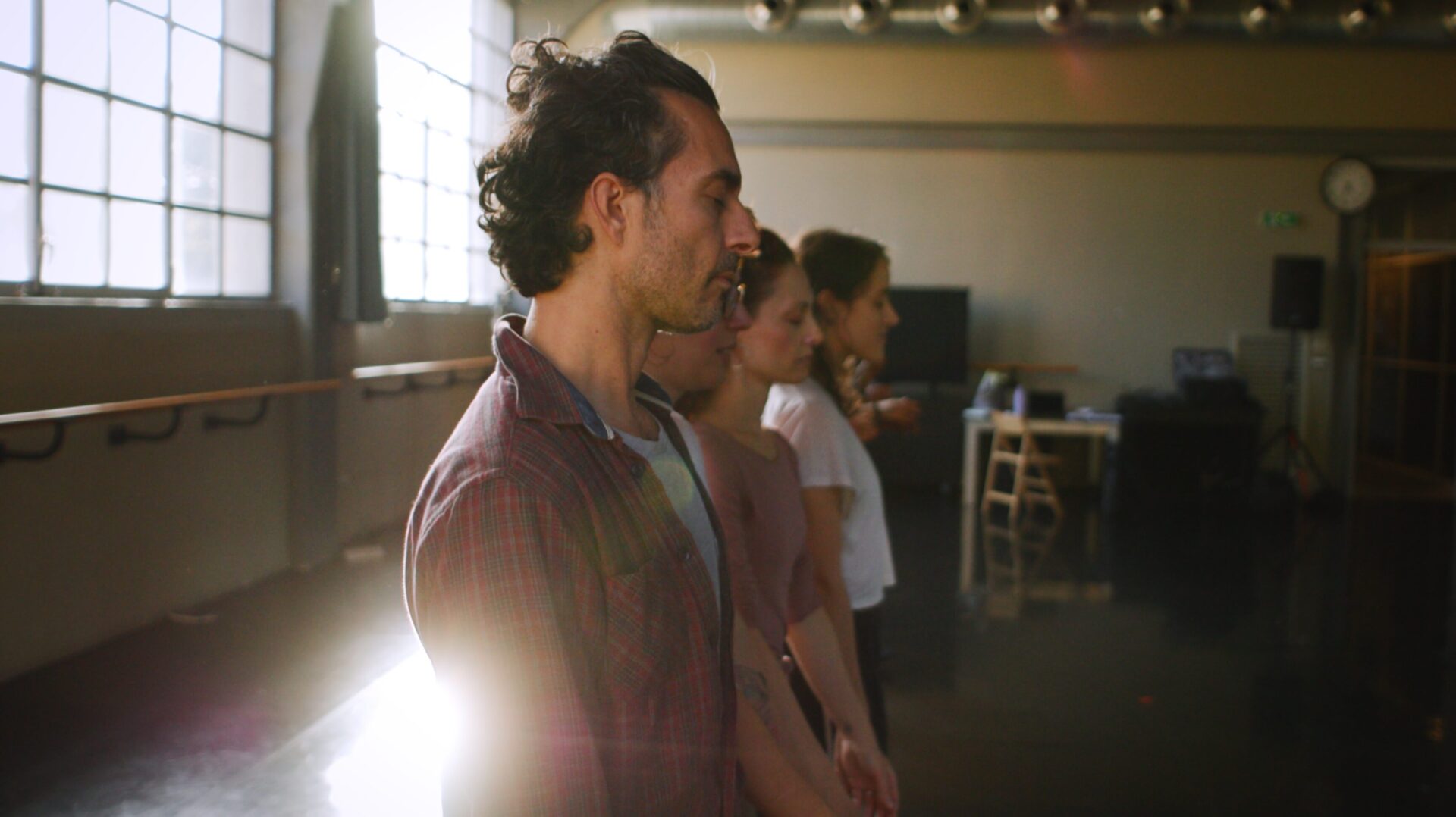
Each training session is based on an experiential approach and includes lessons, meetings, and field projects, fostering the exchange and sharing of knowledge, skills, and artistic experiences that enrich reflection and strengthen participants’ competencies.
Through action and reflection on action, learning capacity is enhanced, existing knowledge is valued and integrated with new techniques, enabling meaningful learning that leaves room for the creative act, for the facilitator’s capacity to listen and feel, and to connect with others within a non-judgmental dynamic of exchange and mutual enrichment. Experimentation and the learning of new creative processes and dance languages are further supported through the relationship with the instructor. Significant space within the programme is dedicated to active dialogue between trainers and participants, as well as to the exploration of different modes of bodily expression, with the aim of fostering trust and comfort while facilitating the integration of physical and emotional dimensions.
FRANCA ZAGATTI | 24, 25, 26 APRIL 2026
Franca Zagatti is a teacher and dance artist who has long advocated for and promoted a plural and inclusive vision of dance. For many years she has led educational dance workshops across all levels of schooling and has conceived artistic projects involving intergenerational groups, families, older adults, and people with different abilities within festivals, cultural events, and performing arts contexts.
She is also deeply engaged in research on educational and community dance and in the training of educators, dance teachers, dancers, and performers. She is Director of the Danzeducatore® Course at Centro Mousikè in Bologna and President of DES – the National Association for Dance, Education and Society. The author of numerous essays and monographs, from 1999 to 2013 she served as an adjunct professor at the Faculty of Education Sciences and at DAMS, University of Bologna.
SUSANNA RECCHIA | 15, 16, 17 MAY 2026
Susanna Recchia graduated from the National Academy of Dance in Rome and has worked professionally in Italy as both a dancer and teacher. Since 2001 she has lived in London, where she obtained a Diploma and subsequently a BA in Dance Studies at Trinity Laban, winning the Marion North Award for Best Performer.
Her work as a freelance dancer and teacher has led her to collaborate with internationally renowned artists and choreographers and to perform in theatres and art galleries throughout Europe. As a dancer, she has worked with Candoco Dance Company, touring several productions and leading numerous workshops internationally.
GIUSEPPE COMUNIELLO | 19, 20, 21 JUNE 2026
Dancer and performer, Giuseppe Comuniello began his dance career in 2009 with choreographer Virgilio Sieni, with whom he continues to collaborate. He has also worked with national and international choreographers such as Alessandro Schiattarella, Emanuel Gat, Emanuel Rosenberg, and Michela Lucenti/Balletto Civile.
Alongside his performance career, he developed a practice focused on the transmission of movement through contact improvisation, leading movement workshops open to everyone. Since 2016 he has collaborated with the Oriente Occidente Festival within the international network for accessible dance.
LARA GUIDETTI | 10, 11, 12 JULY 2026
An Emilia-Romagna–based dancer and choreographer, Lara Guidetti graduated in 2006 from the Theatre-Dance Atelier of the Paolo Grassi School in Milan, training with leading international masters and taking part in numerous artistic projects. Founder of the Sanpapié company, she is the creator and performer of over 60 works and performances presented in Europe and China.
She collaborates with major directors and theatres, creating choreography for opera and contemporary theatre. For over a decade she has taught at prestigious artistic training institutions, developing innovative and inclusive pathways that combine theatre and dance.
STOPGAP DANCE adance COMPANY (UK) | SEPTEMBER 2026
(schedule to be confirmed)
Stopgap Dance Company is a renowned contemporary dance company based in the United Kingdom and a global leader in the integration of disabled and non-disabled dancers. Since 1995, the company has created inclusive productions for national and international touring, promoting a culture of diversity and challenging prejudice through poetic and accessible dance, with a strong social and educational commitment. Stopgap is internationally recognised for transforming dance into a radically accessible art form, creating “lived utopias” in which diversity is central.
LAURA MATANO/ DAVIDE TAGLIAVINI–Associazione XL | 22, 23, 24, 25 OCTOBER 2026
A well-established organisation in the Reggio Emilia area, XL Association offers artistic activities grounded in inclusivity, without barriers or discrimination, open to contemporary expressive languages and accessible to all.
Laura Matano is the founder of the XL collective, a company born from a shared vision and a common desire to build something new by exploring the boundaries between movement and digital arts. She teaches projects focused on Danzability, bringing together dancers with and without disabilities. In September 2003, she initiated the Danzability project through her first collaboration with the Municipality of Reggio Emilia.
The workshop will be structured in collaboration with Davide Tagliavini, dancer, actor, and performer.
GAIA GERMANÀ
Facilitator and trainer in educational dance workshops, Gaia Germanà’s research paths on poetic gesture have involved non-professionals of widely varying ages and backgrounds.
She has worked as assistant to choreographer Virgilio Sieni within the Venice Biennale Dance programme in 2013 and 2014 for the projects Agorà Tutti and Danze per capire (with visually impaired dancers), and in collaboration with Emilia-Romagna Teatro for the projects Cena Pasolini, Brevi danze giovanili, and Ballo 1890_natura morta, performances based on encounters with people at their first dance experience.
Gaia Germanà will oversee the technical training throughout the entire programme, working alongside the involved facilitators and supporting participants in their learning process.
IN-PERSON CLASSES
The in-person activities will be led by artists, choreographers, or dancers who have developed their own models of artistic and expressive relationships with people in conditions of fragility. Through an active approach—where themes related to the modules are presented, explored, and simulated—participants will engage in workshop-based activities and practical simulations. This experiential methodology enables participants to acquire skills through direct practice and embodied learning.
TESTIMONIAL SESSIONS
These sessions are moments of exchange led primarily by disabled dancers and artists, as well as researchers and experts in cultural welfare who, in various capacities, work in meaningful contexts focused on the relationship between performing arts and well-being. The testimonial sessions—scheduled within each training module—allow participants to engage with concrete examples and experiences developed through best practices, models, and strategies. The aim is to acquire knowledge that can be integrated into participants’ own operational toolkits.
PROJECT WORK
This activity is designed to support the development of a personalised methodological toolkit to be applied when working with people in conditions of fragility within artistic creation processes or workshop-based experiences. Each project will be agreed in advance with the tutor in terms of its specific objectives and will take into account insights and stimuli emerging from the individual modules, capitalising on the experiences of the trainers and/or the testimonial sessions.
The programme is open to applicants who meet the following requirements:
- Individuals who have already attended training courses related to dance for people in conditions of fragility and who wish to further refine their reference models and performance approaches;
- Individuals with experience in the live performing arts sector who are interested in issues related to disability and bodily fragility;
- Dance teachers, dancers, or performing arts practitioners with prior experience in working with fragility and a strong interest in deepening the tools needed to effectively lead inclusive dance experiences;
- Individuals working in the field of cultural welfare.
FORMAL ENTRY REQUIREMENTS
-
Completion of compulsory education and fulfilment of the right–duty to education and training;
-
Residence or domicile in the Emilia-Romagna region prior to enrolment in the programme;
-
Knowledge and skills in the live performing arts sector acquired through:
-
professional and work experience in live performance;
-
non-formal and informal training pathways, including non-professional experiences;
-
relevant formal tertiary education pathways.
-
SUBSTANTIVE REQUIREMENTS
-
English language proficiency at B1 level.
-
Previous experience with disability and/or bodily fragility—through participation in training initiatives aimed at vulnerable groups or within cultural welfare activities—is considered an asset.
-
Applicants must demonstrate motivation to participate through a motivation letter or a digital self-presentation outlining their personal and professional aims in undertaking the programme. It is preferable to include letters of support from employers, where applicable, confirming their willingness to support the applicant throughout the training period.
Unemployed or inactive individuals are not eligible to apply.
Interested applicants must access the website www.cnafoer.it
and click on the “VOGLIO ISCRIVERMI” (“I WANT TO APPLY”) button. After entering their personal details, they will be contacted by the programme coordinator, Francesca Ranuzzini, who will send the registration form.
The completed application form, together with all required documentation, must be submitted by email to ranuzzini@cnafoer.it
Application deadline: 28 February 2026
Verification of both formal and substantive requirements will be carried out by the coordinator of CNA Formazione ER, who will assess eligibility for admission to the selection process, also with the support of the partner Centro Coreografico Nazionale Aterballetto.
The selection process will be activated and documented only if the number of eligible applicants exceeds the available places. Its purpose is to assess whether candidates possess the knowledge and skills necessary to successfully acquire the competencies expected at the end of the programme.
For all applicants who meet the formal and substantive requirements, the selection procedure includes a written test and an individual motivational interview, the combined weight of which will not exceed 50%. The assessments will be carried out by a Selection Committee appointed by CNA Formazione ER, composed of an internal selection manager and representatives of CCN Aterballetto, who will evaluate the technical components.
The written test, lasting one hour, will consist of questions on:
- dance education, live performing arts and theatre.
The individual interview (50%), lasting approximately 15 minutes per candidate, is aimed at exploring and assessing:
- motivation to participate in the programme and to actively use the tools acquired to effectively lead inclusive dance experiences for people in conditions of fragility;
- awareness of one’s professional role and coherence with the stated professional project;
- previous experience;
- organisational skills, ability to work in teams, and goal-oriented working methods.
The selection process may include, as an alternative to the written test, a practical assessment, evaluated according to objective and measurable criteria.
The outcome of the selection will be communicated by email. The ranking list will be published on www.cnafoer.it.
Admitted candidates will receive a formal notice convening them for the first day of training.
The programme will be activated only upon reaching the minimum number of 12 participants who have confirmed and formalised their interest and commitment to attend the course.
Participation fee
FREE OF CHARGE (co-financed by resources from the European Social Fund Plus)
Duration
150 hours
Date
March – October 2026
Where
Centro Coreografico Nazionale / Aterballetto, via della Costituzione 39, Reggio Emilia
Number of expected participants
12
Certificate awarded
Certificate of attendance following attendance of at least 70% of the total number of hours.
Contact person for CNA FO.ER, Reggio Emilia branch
Francesca Ranuzzini ranuzzini@cnafoer.it 0522 1880740- 337/1025635
Application deadline
28 february 2026