Loading Events

CENERI / DOPPIOGIOCO


On the occasion of Festival Aperto, CCN/Aterballetto presents the world premieres of Ceneri by Marcos Morau and DOPPIOGIOCO by Philippe Kratz.

Teatro Municipale Romolo Valli – Saturday 7 November 2026 at 8.30 pm and Sunday 8 November 2026 at 5.00 pm

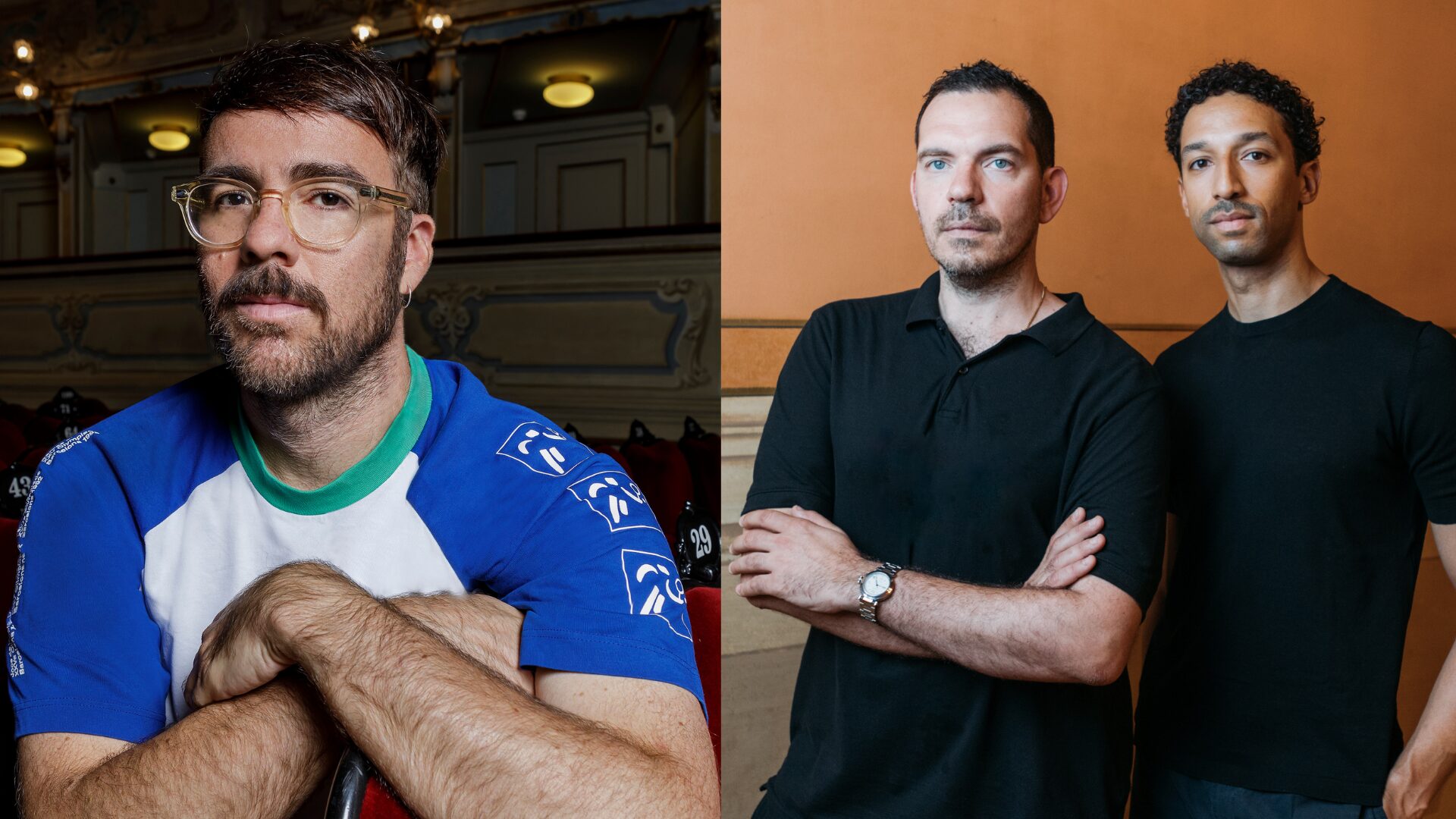
The Centro Coreografico Nazionale / Aterballetto presents the world premiere of an evening made up of two new creations by some of the most compelling authors on the contemporary scene: Ceneri by Marcos Morau and DOPPIOGIOCO by Philippe Kratz, with dramaturgy and set design by Fabio Cherstich.

A performance marking Marcos Morau’s return to CCN/Aterballetto following the success of Notte Morricone. For his new creation, Ceneri, the choreographer draws inspiration from Le ceneri di Gramsci, a musical adaptation of Pier Paolo Pasolini’s poetry collection, composed as a choral oratorio by Giovanna Marini, as a starting point for a reflection on community, its loss, and what remains when a collective form dissolves. Alongside it, Philippe Kratz, a former lead dancer of the company and a choreographer well established on the international scene, creates DOPPIOGIOCO, a new work for eight dancers in which basketball becomes a metaphor for conflict, belonging and sudden synchronisation. Two different languages that together question how bodies organise, divide and recompose themselves.

Ceneri

Direction and choreography Marcos Morau
Music Le ceneri di Gramsci by Giovanna Marini. Recording release “I Dischi di Angelica” – Block Nota, 2006
Sound design and original music Alex Röser Vatiché, Ben Meerwein
Costume design Silvia Delagneau
Lighting design CUBE.bz
Choreographer’s assistants Shay Partush, Fabio Calvisi
Special thanks to Sartoria Fondazione I Teatri

Production Fondazione Nazionale Della Danza / Aterballetto
Co-Production Festival Aperto / Fondazione I Teatri di Reggio Emilia
In collaboration with AngelicA | Music Research Centre – Bologna

What begins as a collective celebration gradually turns into a ceremony of farewell. Some bodies are pushed away, veiled and symbolically buried by those who remain. Ash and water fall upon them in a gesture that wavers between punishment, mourning and blessing.
Since ancient times, communities have built rituals to honour their dead and safeguard their memory. To bury, cover, wash or keep vigil over a body has never been merely an act of farewell, but also a way of acknowledging that individual existence lives on within collective history. The dead remain among the living through remembrance, shared stories and the gestures that a community chooses to preserve.
In Ceneri, ash evokes both disappearance and permanence. It is what remains after the passage of time, but it is also the material trace of a life that refuses to vanish completely. Water, by contrast, acts as an element of transition and transformation: it purifies, accompanies, blesses and allows the passage from one state to another. Together, ash and water turn the scene into an ambiguous rite, in which we do not know whether we are witnessing an expulsion, a funeral or a gesture of collective love.
Dance, word, music and the force of the chorus transform the stage into a space of political and emotional confrontation. As in Pasolini, the ashes are not merely the residue of something that has vanished. They are the persistent trace of a question that continues to accompany us.
The most contemporary image of the work is not only that of a community immunising itself against the other, but that of a generation desperately seeking to belong to something while fearing the loss of what makes it unique. In this tension, Gramsci, Pasolini and our present converge.

Marcos Morau – director and choreographer

DOPPIOGIOCO

Choreography Philippe Kratz
Dramaturgy and set design Fabio Cherstich
Additional music Various artists
Sound design and original music Luca Maria Baldini
Costume design Patricia Villirillo
Costume making Nuvia Valestri
Lighting design Valerio Tiberi

Production Fondazione Nazionale della Danza / Aterballetto
Co-Production Festival Aperto / Fondazione I Teatri di Reggio Emilia

Inside a black box, the space is etched with strips of white light: a ring, a court, a boundary that presumes to decide who we are. Two twin hoops, doubled, are motionless sentinels, totems of conquest and failure, targets that shine or dim depending on who looks at them. Everything is ready and nothing is stable: the game can begin at any moment, even when no one is truly ready.
The bodies enter, recognise one another, distrust one another, split into teams without knowing why, form alliances by instinct, betray one another out of necessity. Every gesture is an attempt, quivering like an omen; every step is a calculation or a tremor. The warm-up does not prepare — it reveals: the tensions, the suspicions, the silences before the burst.
At the centre, the ball. Weight, promise, threat. When it falls, it explodes: it is not a bounce but a bomb that opens cracks in the ground, in the breath, in the relationship between the bodies. Every pass is a risk, every shot a confession. You entrust yourself to the other by instinct, or you strike them with the precision of a necessary gesture. You protect and you wound with the very same energy.
Blind shots cross the air like prayers or challenges flung into the void: whoever throws cannot know whether they will hit the target or the memory of a missed intention. In that suspended instant everyone holds their breath: it is not the basket that matters, but the courage not to look, to let go of what cannot be controlled.
And then the group explodes, implodes, devours itself, sustains itself. One against all. All against one. Crowd against solitude, and a solitude that at times cries out louder than the crowd. Rules exist only to be broken; the ring is a cage only for those who do not dare to cross it. You push one another, lift one another, obstruct one another as in every day of our lives, where love and competition coexist in the same gesture.
But at a certain point, without warning, the bodies synchronise. The two teams dissolve, recomposing into a single breathing creature. It is a fragile, absolute moment: the geometry of the court becomes a guide, no longer a barrier. Conflict turns into dance, struggle becomes listening. There is no longer a victory to seek, only a sudden equilibrium, precious as a truce.
Then chaos returns, because it is in our nature. Alliances come undone, the ball’s trajectory breaks again in the air, multiplying like doubts, like attempts. The balls fall one after another, slow bombs that recount what has been lost and what might still come to pass.

Fabio Cherstich – Dramaturgy and set design
Go to Top